
Article Contents ::
Basic principles of Ayurveda —
Ayurveda is the ancient medicine Science of India to the world it’s best knowledge to stay healthy and happy, The concept of ayurveda is based on the Three Great base element of the Ayurveda Known as Vaat Pitta and Kapha, these three are the main Pillar of this Great Fort of Ayurveda to protect the Life from diseases , Which is supposed to be the science of God Bhramma The God of Creation , Ayurvedic philosophy is the concept of the three doshas (Tridosha),Ayurveda- The Vata, Pitta and Kapha also called the “tri-energies”. all the processes in all levels of our life. Vata governs all movement, Pitta all heat and transformation and Kapha all growth, structure and lubrication. So this is the relation with modern terms
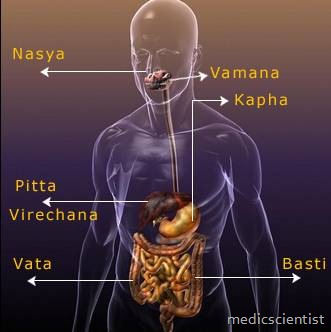
Tridosha Vata Pitta and Kapha in Ayurveda
“Samadosha samagnisch samadhatu malakriya Prasanna atma mana swastha iti abhidhiyate.” (Sanskrit Verse)
Vata Dosha
- Pran – All Sensory nervous functions adrenergic and colinergic.
- Udan – All motor nervous function related Substances.
- Vyan – Conductive system of heart related substances
- Saman –substances related to Gustatory nerve stimulations related to secretions and peristaltic movements of gut.
- Apan – Pelvic nerve stimulatory substances (related to excretion).
Characteristics of Vata Dosha —
- cold
- dry
- irregular
- light
- mobile
- rarefied
- rough
Functions of Vatta Dosha (or controls) —
- Movement
- Breathing
- Natural Urges
- Transformation of the tissues
- Anxiety
- Emptiness
- Excretions
- Fear
- Life force
- Motor functions
- Nerve impulses
- Secretions
- Sensory functions
- Thoughts
- Ungroundedness
Pitta Dosha
- Pachak – digestive enzymes and Iso-enzymes, amylase in plasma (gastric analysis).
- Ranjaka – Haemopoetic substances
- Sadhaka – hormones related to brain intellectual functions.
- Alochaka – Visual purple.
- Bhrajaka- Melanins.
Characteristics of Pitta Dosha —
- clear
- fluid
- hot
- light
- malodorous
- sharp
- soft
- subtle
Functions of Pitta Dosha (or controls) —
- Anger
- Body heat
- Digestion
- Hate
- Hunger
- Intelligence
- Jealousy
- Perception
- Temperature
- Thirst
- Understanding
Kapha Dosha
- Keldaka- Mucus of gut.
- Bhodhaka- mucin of saliva.
- Avalambkha- Triglycerides, glycoprotein in venous blood plasma, plural fluid, pericardial fluid, intervertebral disc fluid.
- Shleshaka- Sinovial fluid, gelatin.
- Tarpaka – Cerebrospinal fluid.
Characteristics of Kapha Dosha —
- cold
- dense
- heavy
- oily
- smooth
- stable
Functions of Kapha Dosha (or controls) —
- Accumulation
- Attachment
- Energy
- Forgiveness
- Greed
- Holding
- Lubrication
- Possessiveness
- Stability