
MANAGEMENT of Acute Myocardial Infarction (AMI)
MANAGEMENT Management involves
- Prompt attention and diagnosis.
- Reperfusion therapy
- Management of pain.
MI is a medical emergency; Typical treatment for the patient includes:
- diagnosis and treatment should not be delayed.
- administering oxygen immediately, and giving aspirin and beta blockers, unless there are strong contraindications.
- ordering fibrinolytic drugs (e.g., tissue plasminogen activator) unless contraindicated or emergency angioplasty (where it is available).
- giving angiotensin converting enzyme inhibitors.
- giving statins.
- giving nitrates and morphine for vasodilation and pain relief. giving antiplatelet agents such as heparins or glycoprotein IIb/IIIa inhibitors.
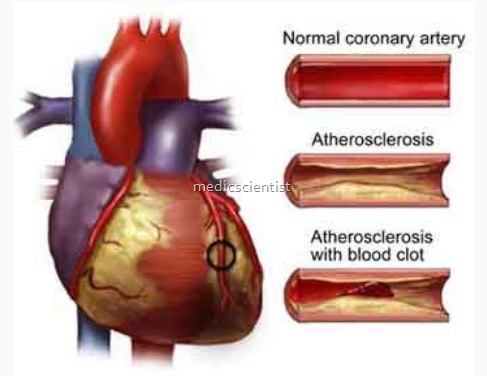
MANAGEMENT of Acute Myocardial Infarction (AMI) -1
Management of Pain
Morphine :
- For pain Morphine is given to :
- Decrease sympathetic drive
- Decrease cardiac output
- Decrease arterial pressure
- Decrease cardiac work load
- Decrease vasoconstriction
- Symptomatic relief.
Side effects of Morphine ..
- Severe hypotension – elevate legs and give IV saline
- Bradycardia – give atropine IV
- Heart block – give atropine 0.5 mg IV – repeat if
- necessary
- Diaphoresis and Nausea
- Vomiting – give antiemetics.
- Dose
- Injection Morphine is given- 2 to 5 mg IV at a time. –
Nitroglycerine:
- Sublingual NTG is given 0.4 mg sublingual at 5 minute intervals. –
Nitrate :
- are given to decrease myocardial oxygen ?emand, a*nd increase myocardial oxygen supply.
- IV NTG is given if BP is more than 100 mmHg . Not to be given in RV infarction.
Beta Blockers:
IV blockers are given to :
- Relieve pain
- Prevent arrhythmias.
- Decrease oxygen demand
- Decrease ischemia
- Decrease mortality
- Metoprolol is given 5mg every 5 min 3 times.
- Then 50mg is given ever 6 hours for 48 hours.
- Then 100mg every 12 hours.
Contraindications of Beta Blocker —
- Heart rate <60 per minute
- Systolic blood pressure < 100 mmHg
- PR Interval >0.24 sees.
- Rales > 10 em above the diaphragm
Calcium Channel blockers
- have little role. It raises the threshold for angina.
- read more about management AMI —
Fore more detail acute-myocardial-infarction-management-regime-for-management-of-ami