All about Bacterial Infections Caused by HELICOBACTER PYLORI
- Gram–Negative HELICOBACTER PYLORI with diagnosis Treatment Signs and symptoms
HELICOBACTER PYLORI INFECTION
A motile, spiral, gram-negative bacterium that causes peptic ulcers and gastric cancer. It is treated with combined antibiotics and agents to block gastric acid secretion
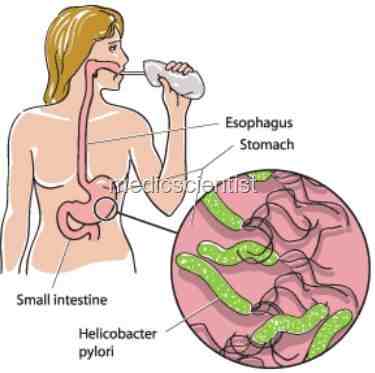
Helicobacter pylori, also known as H. pylori, is a bacterium that is commonly found in the stomach. It is present in approximately one-half of the world’s population.
- H. pylori is probably spread by consuming food or water contaminated with fecal matter.
 |
| HELICOBACTER PYLORI INFECTION |
- H. pylori is most common cause of gastritis in maximum population in world wide,
- H. pylori is the main basic cause about which we have to think to eliminate the cause of gastric ulcers,
- H. pylori colonizes the stomach and causes peptic ul cer disease and gastric malignancy.
- It is a gram-negative spiral flagellated bacillus.
How dose H.pylori infect peoples —
- In the United States and other developed countries, infection with H. pylori is unusual during childhood but becomes more common during adulthood.
- The bacteria invades the protective tissue that lines the stomach.
- This leads to the release of certain enzymes and toxins.
- there is many way by which h pylori may infect the peoples stomatch,
- it can survive in high acidic concentration that;s why it dose survive in stomach acids,
- it irritate the gastric mucosa to secreat high amount of gastric juice which ultimately the main cause of gastritis and gestric ulcers,
- so if we are treating the gastric ulceration then with hyper acidity we have to treat this H. pylori infection too.
|
| How dose H.pylori infect peoples |
|
| H.pylori infection treatment |
|
| How dose H.pylori infect peoples stomatch |
H. PYLORI SYMPTOMS —
- Pain or discomfort (usually in the upper abdomen)
- Bloating
- Feeling full after eating a small amount of food Lack of appetite
- Invasive tests include endoscopy, gastric biopsy, and biopsy with bacterial culture for H. pylori.
- Most individuals with chronic gastritis or duodenitis have no symptoms. However, some people develop more serious problems, including stomach or duodenal ulcers.
- Noninvasive diagnostic procedures include immunological tests of antibodies to H. pylori and urea breath tests.
- Nausea or vomiting
- Ulcers that bleed can cause a low blood count and fatigue.
- Dark or tar-colored stools
H. PYLORI DIAGNOSIS —
- There are several ways to diagnose H. pylori.
- The most commonly used tests include the following:
- H. pylori can be diagnosed with a test of the blood, breath, or stool.
- H. pylori testing is recommended for anyone with a stomach ulcer.
Treatment of hyper acidity H. pylori —
- Up to 20 percent of patients with Helicobacter pylori infection are not cured after completing their first course of treatment.
- People with a history of peptic ulcer disease, active gastric ulcer, or active duodenal ulcer associated with H. pylori infection should be treated.
- Treatment involves taking several medications for 7 to 14 days.
- This medication decreases the stomach’s production of acid, which allows the tissues damaged by the infection to heal.
- Two antibiotics are generally recommended; this reduces the risk of treatment failure and antibiotic resistance.
- Retreatment usually requires that the patient take 14 days of a proton pump inhibitor and two antibiotics.
- A regimen of
- Omeprazole,
- Clarithromycin,
- and Amoxycillin / Metronidazole / Tetracycline
- is used for the treatment of GERD (gastro esophageal reflux dis ease) and peptic ulcer.