
Article Contents ::
- 1 All about Bacterial Infections PLAGUE Caused by Gram–Negative Yersinia pestis SPECIES
- 2 PLAGUE
- 3 signs and symptoms of plague
- 4 classification of plague — Bubonic plague
- 5 Septicemic plague
- 6 Pneumonic plague
- 7 complete cycle of Yersinia pestis plague
- 8 Diagnosis of plague —
- 9 Treatment of plague
- 10 plague vaccine —
All about Bacterial Infections PLAGUE Caused by Gram–Negative Yersinia pestis SPECIES
- Gram–Negative Yersinia pestis SPECIES with diagnosis Treatment Signs and symptoms
Any widespread contagious disease associated with a high death rate. An often fatal disease caused by Yersinia pestis; the natural hosts are ground squirrels, wild rodents and rats, and the vector is the rat flea.
 |
| Bacterial InfectionsPLAGUE Caused byGram–Negative Yersinia pestis |
PLAGUE
- plague is one of the most horrible disease at old time,
- now a days this plague is almost eliminated, but in some countries of world some cases are detected at time to time.
- Plague is an acute febrile illness caused by infection with Yersinia pestis.
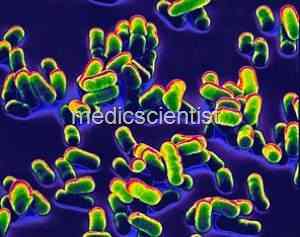 |
| Yersinia pestis |
- The plague bacteria is transmitted to humans by flea bite, or by contact, or by airborne droplets from infected wild rodents (rats).
| plague bacteria is transmitted to humans by rats |
- there is most common carrier is this flea, which lies at rats body, which causes a advance role in distributing of this dangerous disease.
- The different forms of plagues are bubonic, septicemic and pneumonic.
| plague bacteria is transmitted to humans by flea |
- Plague is characterized by fever and sometimes shock, multiorgan failure and death.
- It can also cause meningitis, endophthalmitis, and lymphadenitis.
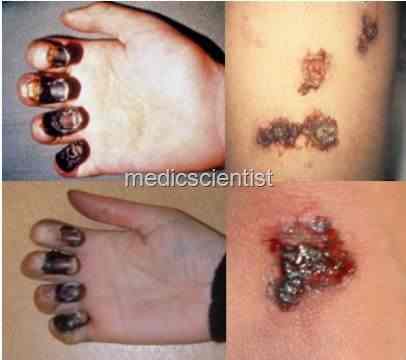
signs and symptoms of plague
| signs and symptoms of plague |
classification of plague — Bubonic plague
- There are chills, fever, myalgias, arthralgias, headache, with tender lymph nodes proximal to site of entry of plague bacillus. The inguinal, axillary and cervical lymph nodes are commonly involved.
| Septicemic plague |
Septicemic plague
- This is a progressive and serious gram-negative infection. It presents with nausea, vomiting, fever, diarrhoea and pain. It can be fatal.
| Pneumonic plague signs and symptoms |
- in pneumonic plague there is clear findings are present in x-ray
- X-ray playes a major role in differential diagnosis of this pneumonic plague from other chest disease,
| Pneumonic plague x-ray findings |
Pneumonic plague
- There is sudden onset of fever, chills, headache, myalgias, dyspnoea, chest pain, cough and expectoration, hemoptysis, circulatory collapse and even death.
complete cycle of Yersinia pestis plague
| complete cycle of Yersinia pestis plague |
Diagnosis of plague —
- It is by examination of specimen of blood,
- lymph node aspirate,
- sputum,
- pulmonary aspirates,
- or CSF, for the organisms.
Treatment of plague
- Streptomycin,
- Gentamycin,
- tetracycline,
- Doxycycline,
- Chloramphanecol.
plague vaccine —
- A vaccine made either from a crude fraction of killed plague bacilli, Yersinia pestis, or synthetically from recombinant proteins.
- It is rarely used, except in a laboratory or for field workers in areas where plague is endemic.